
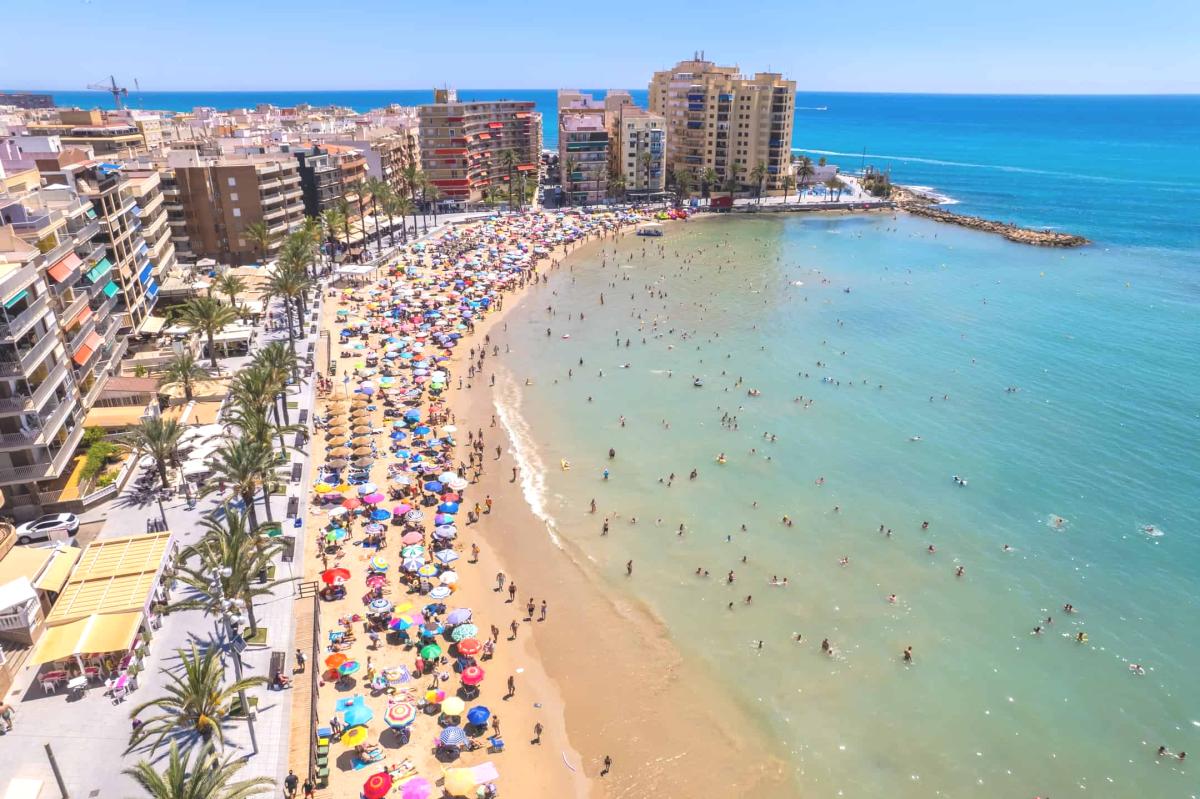
The Costa Blanca and Costa Cálida sit side by side on Spain’s Mediterranean coast. On a map, they can look like one continuous stretch of seaside towns. Spend time exploring them, though, and the differences begin to appear: in the landscape, the feel of the neighbourhoods and the places people return to on an ordinary weekday.
If you are planning a visit, a longer stay or perhaps a move, it helps to know what makes each area distinctive. Neither coast is automatically the better choice. Much depends on the towns you visit and the kind of everyday life you enjoy.
First, where are the Costa Blanca and Costa Cálida?
The Costa Blanca is the Mediterranean coastline of Alicante province in the Valencian Community. It stretches across a varied landscape, from the coves and hills of the northern coast to the beaches, salt lagoons and established towns further south. Places such as Torrevieja, Guardamar del Segura, Orihuela Costa and Pilar de la Horadada are particularly relevant if you are exploring the southern Costa Blanca.
Immediately to the south, the Costa Cálida is Murcia’s Mediterranean coastline. Around the Mar Menor you will find places such as San Pedro del Pinatar, San Javier, Santiago de la Ribera, Los Alcázares and La Manga. Continue along the coast and the scenery changes again at Cabo de Palos, Cartagena and beyond.
The provincial boundary matters for administration, but you do not need to plan your visit around it. Exploring towns on both sides is often the smartest way to understand the wider region.
Beaches and coastal scenery
Costa Blanca: from dunes to coves
On the southern Costa Blanca, Guardamar del Segura is known for long sandy beaches and a distinctive landscape of dunes and pinewoods. Around Torrevieja, you can alternate between urban beaches, seafront walks, smaller coastal stretches and the scenery of the La Mata–Torrevieja lagoons.
Further along Orihuela Costa, individual neighbourhoods have their own character. That is why it is better to visit several beaches and promenades than to judge the entire area from a single stop.
Costa Cálida: a lagoon and the open Mediterranean
The Mar Menor gives part of the Costa Cálida an unusual setting: a coastal saltwater lagoon separated from the Mediterranean by La Manga. The seaside atmosphere around Los Alcázares or Santiago de la Ribera can be quite different from the rocky coves around Cabo de Palos or the beaches of the open Mediterranean.
An important note about the Mar Menor: this is an ecologically sensitive environment. Water conditions and bathing information can vary by location and over time. Before planning water activities, check current information from the relevant authorities rather than relying on an old article, photo or general claim about water quality.
Town life beyond the holiday season
A good place to start is to imagine a normal Tuesday, not just a perfect Sunday in August. Would you enjoy being able to walk to shops, a café, the waterfront and everyday services? Or would you prefer a quieter residential street and a short drive to most errands?
Torrevieja offers an active town environment with an urban centre, seafront areas and a broad mix of year-round activity. In Guardamar, the beach, natural surroundings and town centre create a different experience. Orihuela Costa is not one single town centre; its many neighbourhoods vary considerably in walkability, atmosphere and seasonal activity.
Across the border, Los Alcázares has a distinct seaside-town character, while San Pedro del Pinatar combines residential areas with coastal and natural surroundings. Cabo de Palos centres on its fishing harbour, seafood traditions and maritime setting. And Cartagena offers a completely different option for those drawn to urban history, architecture and culture.
No coastline is uniformly busy or quiet. It is the specific neighbourhood, and how it functions outside peak season, that matters most.
Nature, activities and places worth exploring
If you like long walks, birdwatching and natural landscapes, the Costa Blanca’s protected La Mata and Torrevieja lagoons are a strong reason to explore beyond the seafront. The wetlands are an important habitat for birds and provide marked routes and viewpoints. Guardamar’s dunes offer another kind of coastal scenery.
The Costa Cálida offers an equally interesting mix of environments. Around Cabo de Palos, the rocky headland, coastal walks and nearby marine reserve have become an important part of the area’s identity. The Mar Menor is associated with sailing and other water-based activities, although suitability depends on current conditions, location and provider.
For culture and a more urban day out, compare a visit to Alicante or Orihuela with a trip to Cartagena. Travel around both regions and you will find much more than beaches: historic streets, local markets, seasonal festivals and landscapes that reward slower exploration.
Daily life, services and winter
One of the biggest mistakes visitors make is judging a potential home or long-stay destination only in summer. A restaurant-lined street in August can feel very different in January, and two nearby neighbourhoods may offer very different levels of everyday convenience.
When comparing areas, pay attention to grocery shops, pharmacies, healthcare access, public transport and the route to places you would use regularly. If you plan to work remotely, verify the actual internet connection at the address. If you will spend long periods without a car, walking routes and bus services deserve particular scrutiny.
Transport connections also matter. Alicante–Elche Miguel Hernández Airport and the Region of Murcia International Airport may both be relevant, but flight routes and frequencies change with the season. Check the journey you would actually make, not just the distance shown on a map.
Is one coast more affordable?
It can be tempting to label one region expensive and the other good value. In practice, comparisons are more complicated. Property type, exact location, distance from the sea, condition, local services and current supply all influence prices. Day-to-day living costs also vary by household and lifestyle.
If property is part of your longer-term plan, compare similar homes and realistic total ownership costs instead of relying on average asking prices for an entire coastline. If you are simply visiting, compare transport, accommodation and activity costs for your intended season.
The best comparison is a visit to both
Try planning your first exploratory visit around everyday experiences rather than a long sightseeing checklist:
- Morning: walk through a town centre, visit a local café and see what opens outside the tourist season.
- Afternoon: explore nearby residential streets, beaches and natural surroundings.
- Evening: return to the same neighbourhood when the atmosphere changes and traffic or parking becomes more noticeable.
- Another day: repeat the exercise across the regional border, with the same criteria in mind.
Ask yourself practical questions. Could you imagine returning to this café each week? Would friends and family enjoy visiting? Is the beach more important than a busy town centre? Are you happy to drive for most errands? These details often matter more than broad impressions of “Costa Blanca” or “Costa Cálida.”
So, Costa Blanca or Costa Cálida?
Choose the area that makes your ordinary days feel right. If you enjoy a busy coastal town, local cafés and services within easy reach, investigate the particular parts of Torrevieja and other established communities that offer that experience. If you are interested in the Mar Menor, sailing, traditional fishing villages or the landscapes around Cabo de Palos, allow extra time for the Costa Cálida. For beaches and natural scenery, both regions have compelling places to discover.
Compare towns, not just coastlines. The places that look beautiful in holiday photographs are not always the places that suit your routines, priorities or long-term plans.
Frequently asked questions
Are Costa Blanca and Costa Cálida the same region?
No. Costa Blanca refers to Alicante province’s Mediterranean coast in the Valencian Community. Costa Cálida refers to the coastline of the Region of Murcia.
Can I explore both during one visit?
Yes. The southern Costa Blanca and northern Costa Cálida are neighbouring areas, making a combined exploratory trip practical with appropriate transport.
Which coast is better for living all year?
Both include places with year-round communities and everyday services. The stronger question is which specific town or neighbourhood works best for the way you live.
Keep exploring: learn more about Costa Blanca and Costa Cálida, or ask Ibeka Homes for local guidance if you are beginning to think about spending more time here.
Useful official resources: Costa Blanca official tourism — beaches; Comunitat Valenciana — La Mata and Torrevieja Natural Park; Region of Murcia tourism — Mar Menor; Region of Murcia tourism — Cabo de Palos.