
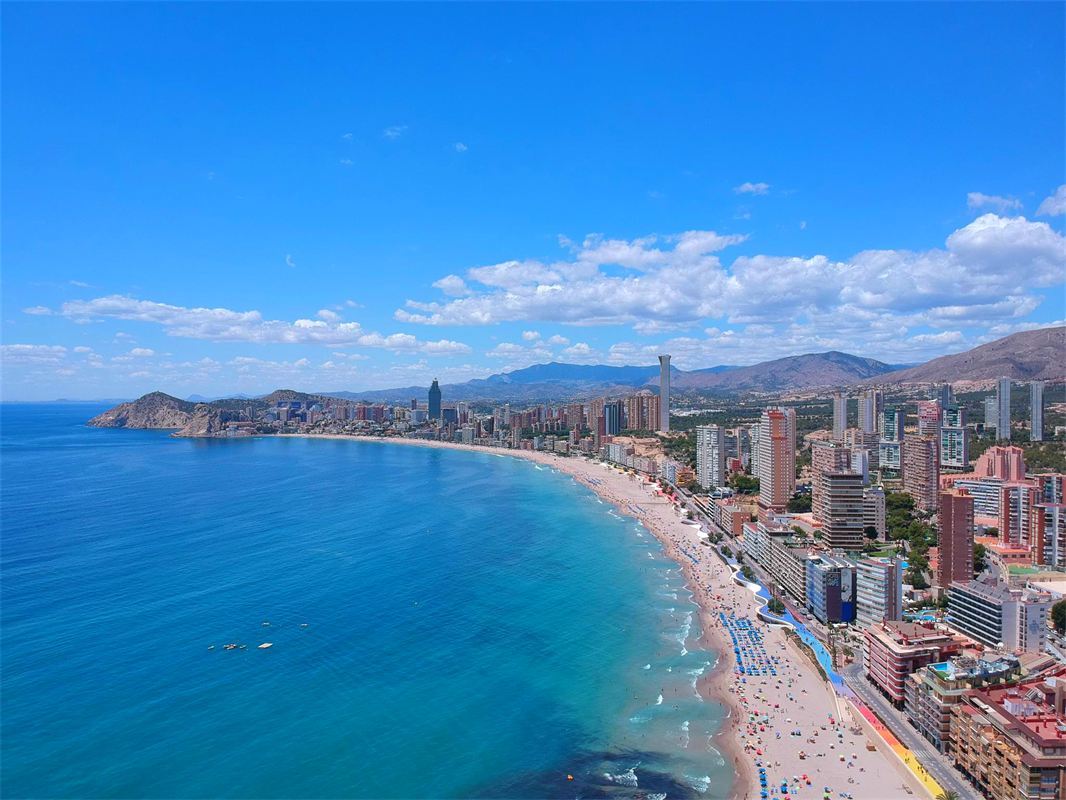
There is a particular appeal to the Costa Blanca after the busiest holiday months have passed. The beaches are still there, of course, but the pace changes. The light feels softer, walking becomes easier in the middle of the day, and many of the best outings no longer revolve around finding a place on the sand.
Winter is also when you get a more revealing picture of coastal life. If you have only ever visited in July or August, you may be surprised by how different the same town feels in January.
What winter on the Costa Blanca actually feels like
The region generally has a milder winter than much of northern Europe, but “mild” is not the same as consistently warm. Sunny afternoons can be pleasant for walking outdoors, while early mornings, evenings and windy coastal days can feel chilly. Rainy spells do happen, too.
That is why layers are more useful than packing as though every day will be a beach day. Bring a light waterproof jacket, shoes suitable for walking and something warm for the evening. If you are staying in an apartment or house, pay attention to heating and insulation rather than assuming the outdoor climate tells you how comfortable the indoors will be.
Enjoy the beaches differently
You might not feel like swimming, but the beach is still one of the region’s best places to spend time. A long walk on the sand, a quiet hour watching the waves or a coffee in a sheltered spot can feel just as restorative as a summer swim.
Places such as Guardamar del Segura and La Mata are particularly attractive for people who enjoy wide stretches of coast. Choose a calm day for a walk, check the wind and sea conditions, and remember that not every seasonal beach service will be operating.
Make winter your walking season
Cooler days are often better suited to longer outdoor outings than the height of summer. Around Torrevieja, signed routes associated with the Lagunas de la Mata y Torrevieja Natural Park provide wetland views and opportunities to watch birds. The Vía Verde de Torrevieja offers another accessible way to spend time outside without committing to a mountain hike.
Farther inland, Alicante province has a wide range of routes through valleys, villages and mountain scenery. Some require experience, appropriate equipment and careful planning; others are suitable for a leisurely family outing. Choose the route by difficulty and weather, not just by how attractive the photos look.
Visit towns when everyday life takes centre stage
Winter is a good time to explore places where the local population is present all year. Shops, cafés, markets and community routines tell you a great deal about a town, although individual opening hours will vary.
Rather than trying to see three towns in a day, give one a proper chance. Have breakfast, walk through the centre, stop at a market if it is operating and see what the streets feel like after lunch. If you are thinking about moving to Spain, these ordinary details matter more than a perfectly framed holiday photograph.
Torrevieja has a sizeable year-round population and a mixture of residential and visitor-oriented areas. Smaller coastal communities can feel quieter outside their main season. Neither is automatically better: the right choice depends on how much activity you want around you.
Use the season to understand a neighbourhood
Winter can be particularly useful for people considering a longer stay or a future home. An area that feels busy and social in August may be much quieter in February. That is not a defect—it may be exactly what someone wants—but it is worth discovering before making plans.
Questions to ask on a winter visit
- Are the shops and services you would actually use open throughout the year?
- Can you comfortably walk to a supermarket, pharmacy and café, or will you rely on a car?
- How does the neighbourhood feel in the evening, not just at lunchtime?
- What is the home like indoors on a cool, damp or windy day?
- Does the area still offer the community life you are looking for outside summer?
These questions are relevant whether you plan to buy, rent or simply return for a longer visit.
Don’t overlook the cultural calendar
The calendar does not become empty when summer ends. Towns across the region have their own festivals, exhibitions, concerts and local celebrations at different times of year. Dates and programmes change, so check municipal or official tourism calendars shortly before travelling.
And give yourself room for a change of plan. Some of the nicest winter days begin with a walk and end with a long lunch because the weather—or simply the mood—suggested doing less.
Is winter a good time to visit?
Yes, if your expectations match the season. Winter is not a promise of daily sunshine or deserted beaches. It is a chance to experience another side of the Costa Blanca: one shaped by walking, food, local routines and the quieter rhythm of coastal towns.
If you want to understand what living here might really involve, seeing the area outside the summer rush is one of the most useful things you can do.
Explore more destinations and residential areas in our Costa Blanca guide.