
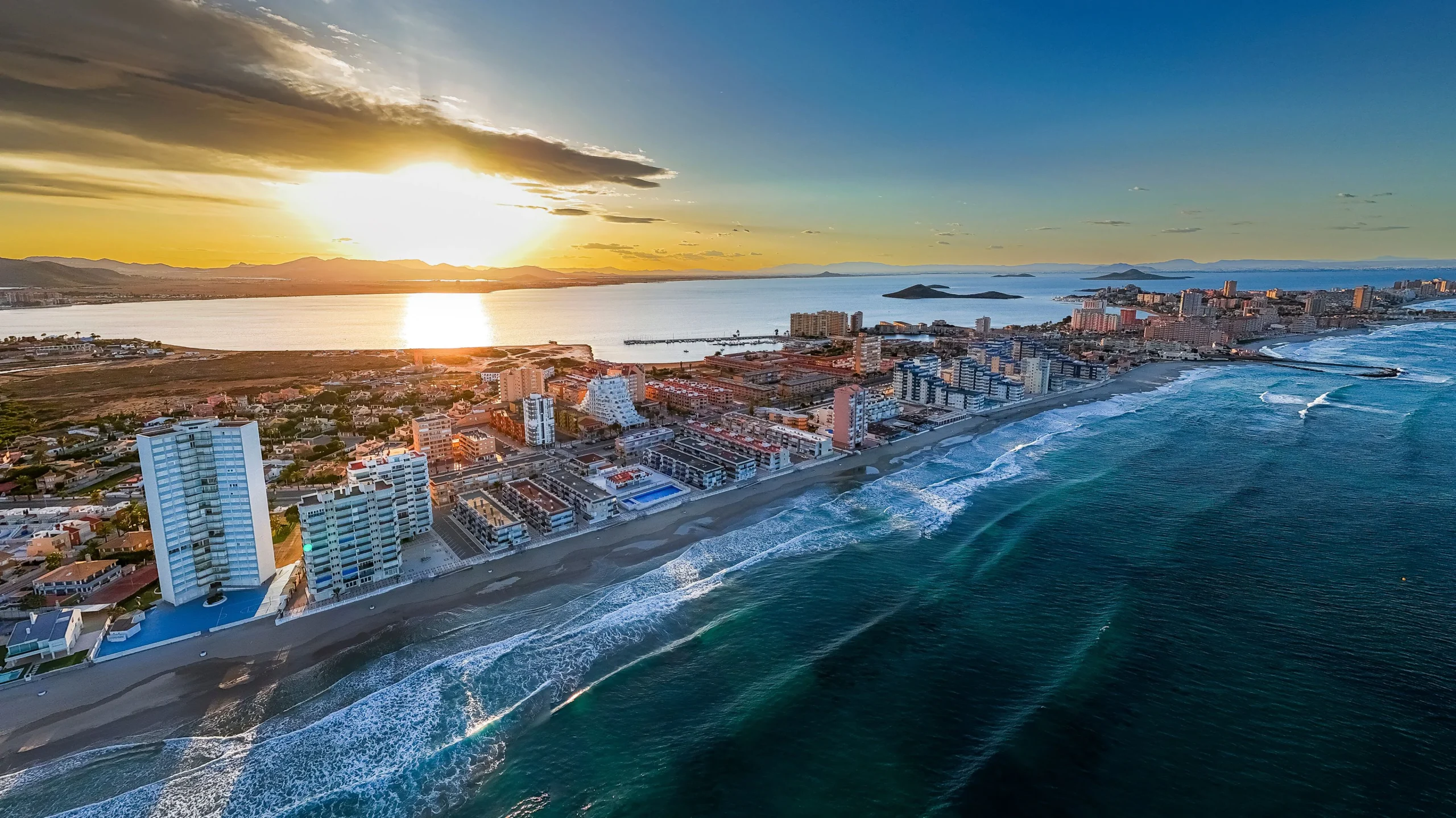
In the northern Costa Cálida, you can spend a morning beside a sheltered saltwater lagoon and an afternoon looking out over the open Mediterranean. The two places are close on a map, but they can feel surprisingly different when you arrive.
The Mar Menor is a large coastal lagoon separated from the Mediterranean by the strip of land known as La Manga. Nearby, Cabo de Palos has a rocky shoreline, a fishing harbour and the open sea beyond it. Understanding that contrast is a useful way to plan a visit to this part of Murcia.
First, what is the Mar Menor?
The name means “smaller sea”, but the Mar Menor is a lagoon, not a separate inland ocean. Its water is salty and relatively shallow, and the surrounding shoreline is shared by several towns with different characters. The beaches at Los Alcázares, Santiago de la Ribera and around San Pedro del Pinatar each have their own setting and relationship to the lagoon.
Because the water is sheltered, the scenery can appear calm compared with the open coast. That does not mean conditions are the same everywhere or every day. The Mar Menor has faced serious environmental pressures, so visitors should check current official bathing-water information and any local notices rather than relying on old photos or general descriptions.
A gentler day around the lagoon
For a relaxed introduction, choose one town instead of trying to drive the whole shore in a single afternoon. Los Alcázares is known for its long relationship with seaside holidays and the traditional life of the lagoon. Santiago de la Ribera offers another version of the waterfront, with a promenade and an established town around it.
These places work well for a simple day: a walk, a coffee, lunch and time to watch the changing light over the water. The pleasure is in the everyday atmosphere, not in collecting attractions.
If you enjoy traditional food, look out for caldero, the region’s rice-and-fish speciality. Recipes vary, and that is part of the interest. Ask what the kitchen recommends rather than assuming every version will be identical.
San Pedro del Pinatar: where salt flats meet two seas
At the northern end of the lagoon, the landscape changes again. The Salinas y Arenales de San Pedro del Pinatar Regional Park includes wetlands, salt flats, dunes and stretches of Mediterranean beach. It is a particularly appealing area for people who enjoy walking and observing birds.
There are marked routes and protected habitats, so plan your visit around the official access information. Bring binoculars if you have them and avoid approaching feeding or resting birds. A quiet walk can be much more rewarding than trying to get as close as possible for a photograph.
The salt flats and lagoon shore are also reminders that nature and human activity have long existed side by side here. It is a landscape to explore with care, not simply a backdrop for pictures.
Cabo de Palos: the open Mediterranean has a different energy
Travel towards Cabo de Palos and the atmosphere shifts. Fishing boats still share the harbour with diving vessels, while the coastline around the headland becomes rockier and more dramatic.
A walk near the harbour and along the paths towards the lighthouse offers views that are quite unlike the Mar Menor. Small coves, rocky edges and the horizon of the open sea take the place of the lagoon’s gentler lines. Keep to signed paths, particularly where the coast is steep or exposed.
The waters offshore form part of the Cabo de Palos–Islas Hormigas marine reserve, an important area for marine life and diving. If you want to dive or take part in a guided water activity, choose a properly authorised operator and check the conditions and applicable rules before booking.
Calblanque: a more natural stretch of coast
Just beyond Cabo de Palos lies the Calblanque Regional Park, with beaches, dunes, salt flats and rugged hills. It can be a wonderful contrast to the more developed parts of the coast, but that is precisely why access is managed carefully.
Vehicle restrictions may apply during busier periods. Do not assume you can drive to every beach, and check the regional park’s current access arrangements before setting out. Carry water and take everything back with you.
Which coastal experience is right for you?
- Choose the Mar Menor shoreline for lagoon views, promenade walks and a day built around a town or village.
- Choose Cabo de Palos for a fishing-harbour atmosphere, rocky coast and open-sea views.
- Choose San Pedro’s protected landscapes for salt flats, birdwatching and nature walks.
- Choose Calblanque when you want a wilder-looking coast and are happy to plan around protected-area rules.
You do not have to choose just one. If you have time, seeing both the lagoon and the open Mediterranean is perhaps the best introduction to this distinctive corner of Murcia.
A practical note before travelling
Coastal access, visitor facilities, transport schedules and bathing conditions can change with the season and local circumstances. Consult official information close to your visit, especially if you plan to swim, dive or enter a protected area. That small amount of preparation can make the day much easier.
For more about the region as a whole, read our Costa Cálida guide.