
Cartagena is the sort of city that changes as you walk through it. One minute you’re looking at a modern waterfront; the next, a Roman wall or a monumental façade reminds you how many different people have lived here. It has a long maritime history, but you don’t have to be a history enthusiast to enjoy a day in its streets.
For visitors staying around the Mar Menor or on the southern Costa Blanca, Cartagena makes an especially rewarding change from a beach-focused itinerary. Go with comfortable shoes and an appetite for taking the occasional detour.
Start with the Roman Theatre
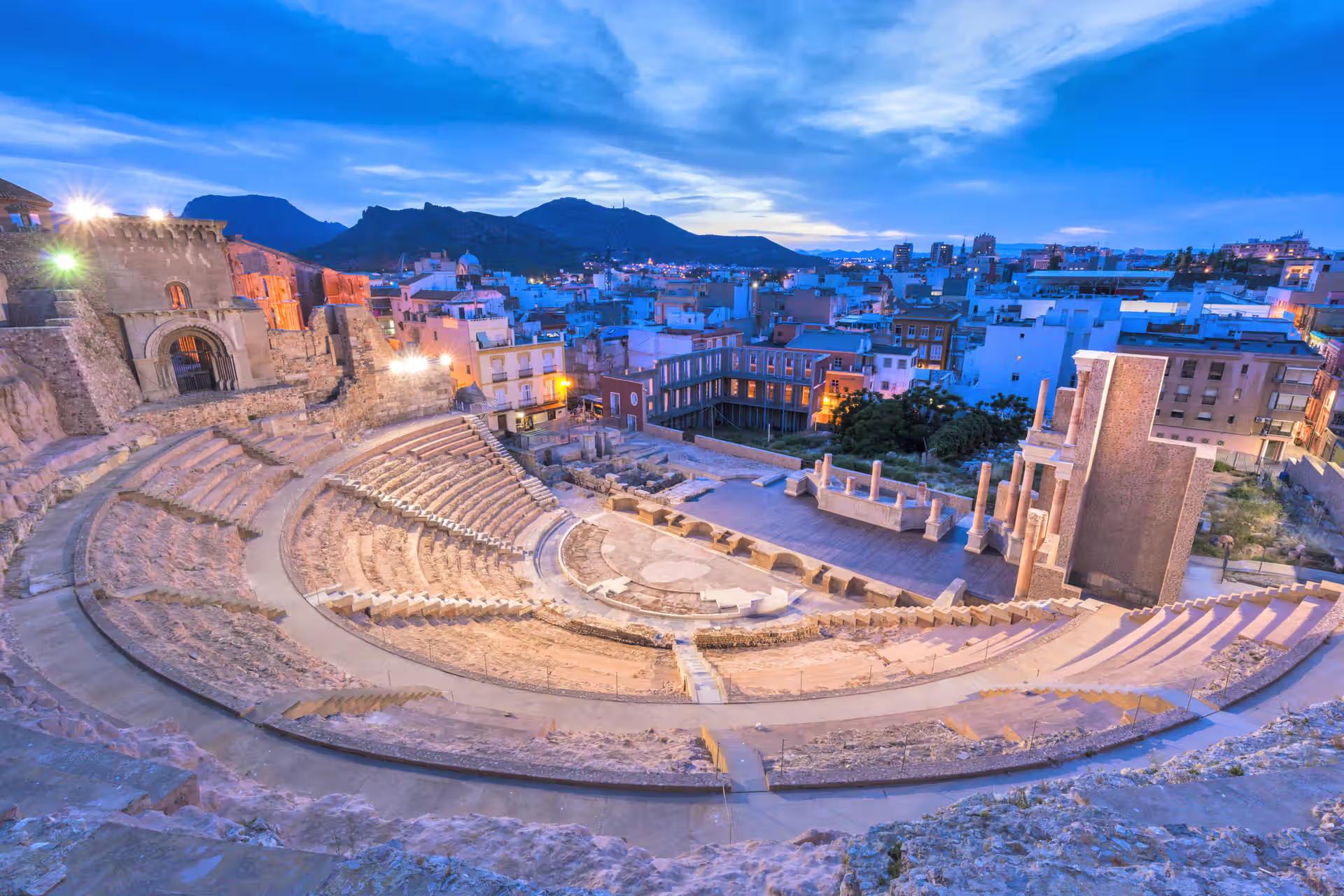
The Roman Theatre is the obvious place to begin, and for good reason. Built in the first century BC, it once held around 7,000 spectators. Its survival is remarkable, not least because the site was covered by later buildings and urban life over many centuries.
Rather than approaching it only as a set of ancient stone steps, visit through the Roman Theatre Museum if you can. The museum’s route, designed as part of a project by architect Rafael Moneo, helps explain how the theatre was discovered and how it fits into the layers of the city. The approach makes the final view of the seating area more meaningful.
Check current opening days and tickets before travelling. Museums may change schedules for holidays or events, and you don’t want your entire morning to depend on an assumption.
Look up as well as around
Leaving the theatre, allow yourself to walk through the historic centre without following the fastest possible route. Cartagena has grand streets and carefully detailed buildings that reflect its later commercial and naval history. The pleasure here is in noticing the changes: Roman archaeology beside later façades, quiet squares opening onto broad streets, and occasional glimpses of the port.
Take a break in one of the central cafés or restaurants. A proper lunch turns the trip into a day in the city rather than a race between monuments.
Head towards the waterfront
Cartagena’s relationship with the sea is difficult to miss. The harbour has shaped the city’s identity for centuries, and the waterfront remains a good place to appreciate its scale. Walk along the port area, look back at the hills framing the city and consider how different this working maritime setting feels from the resort promenades around the coast.
There are cultural attractions around the city, but you don’t have to visit every one. Sometimes the better choice is to sit for a while and let the place speak for itself.
For a higher view, consider the Castillo de la Concepción
The Castle of La Concepción sits above the historic centre and offers another way to understand Cartagena’s layout. From an elevated viewpoint, the close connection between the city, its hills and the harbour becomes much clearer.
There is a panoramic lift serving the castle area, although you should check current accessibility and operating information before relying on it. If heights or climbs are not for you, Cartagena still offers a satisfying day at street level.
A good day without rushing
One simple approach is to make the Roman Theatre your one essential paid visit, leave the rest of the morning free for the historic streets, have a leisurely lunch and spend the afternoon between the waterfront and one additional stop of your choice.
- Book around your priorities: if the Roman Theatre matters most, check entry arrangements first.
- Give walking time room to breathe: the city has uphill stretches and paving that may slow you down.
- Plan for the heat: shaded breaks matter in summer.
- Leave room for discovery: a small exhibition or inviting street may be more memorable than another item on a list.
Why Cartagena belongs on a Costa Cálida itinerary
People often come to the Region of Murcia thinking about beaches, golf or the Mar Menor. Cartagena shows a different side: urban life, archaeology, naval heritage and a sense of continuity that stretches back long before modern tourism.
It also pairs naturally with a separate visit to the coast. The Mar Menor and the open Mediterranean tell one story about this region; Cartagena tells another. Both deserve time on their own terms.