
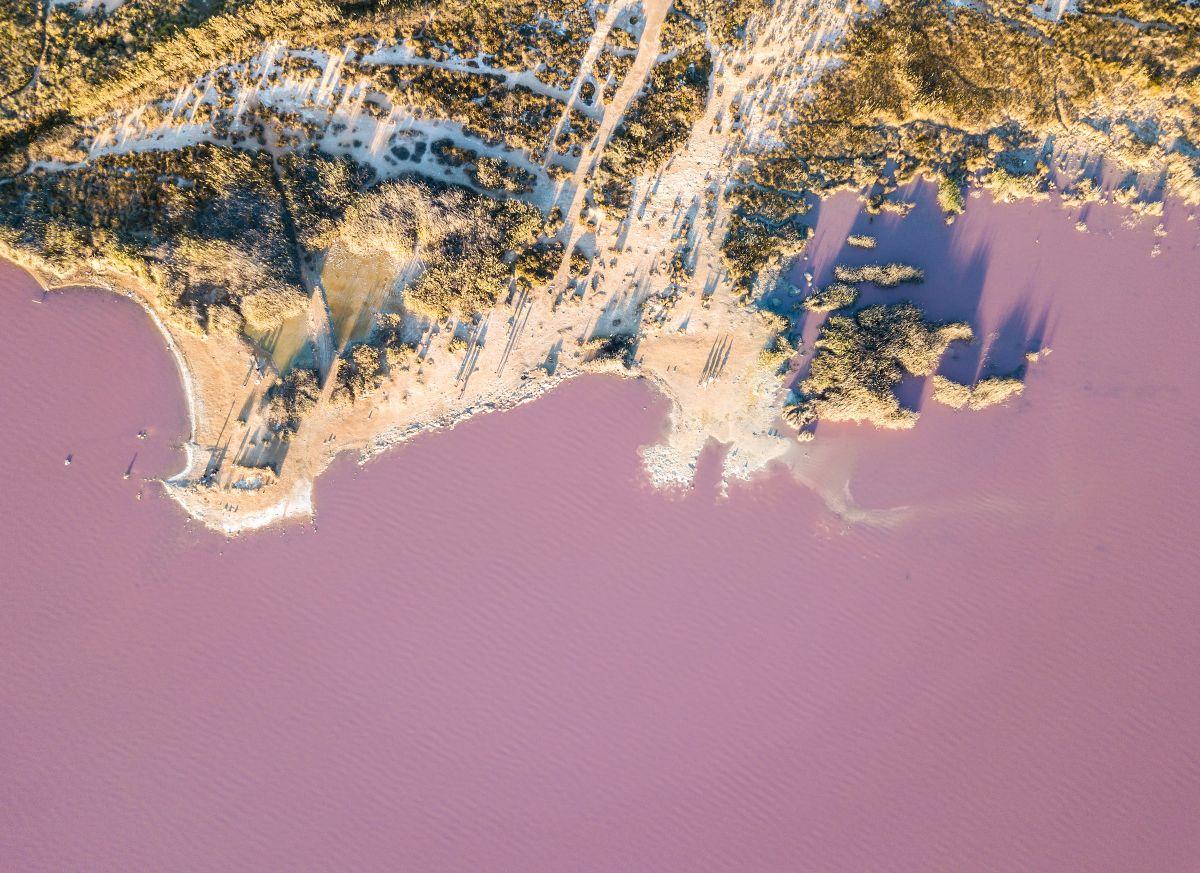
It is easy to understand why photographs of Torrevieja’s pink lagoon travel so far. The colour looks almost unreal on a bright day, particularly when contrasted with the pale salt landscape around it. But the photographs tell only a small part of the story.
La Mata and Torrevieja’s lagoons form a protected wetland and a working salt-production landscape. They are places for patient observation, not a natural swimming pool or a backdrop to be entered for the perfect picture.
Two lagoons, two different experiences
The natural park contains two salt lagoons. The Laguna de Torrevieja is known for its pink appearance, while the Laguna de La Mata is associated with visitor trails and birdwatching. The colour of the pink lagoon is linked to salinity and microorganisms adapted to those conditions; its appearance can change with the light and the state of the water.
The wider park covers approximately 3,700 hectares and supports birdlife that uses the wetland for feeding, nesting or resting during migration. It is therefore much more than a local curiosity. The lagoons help tell the story of the region’s ecology as well as its industrial history.
Why the pink water is not a place to swim
Some online posts suggest walking into the water for photographs or treating the lagoon as a place for a salty bath. Please don’t. Official Torrevieja visitor guidance states that bathing is prohibited, as is entering restricted areas or removing salt, plants and other natural materials.
Those restrictions protect wildlife and a working salt operation. They also mean that visitor access is not the same everywhere around the lakes. For the pink lagoon and salt production areas, use an authorised visit and confirm the current arrangements with the tourism office or operator.
If you’re simply hoping to enjoy the scenery, a photograph taken from a permitted viewpoint is a better souvenir than stepping into an area that is closed to the public.
La Mata is for slowing down
The Laguna de La Mata offers a different sort of day. Marked trails and observation points let visitors explore the landscape without disturbing the fragile areas around the water. The scenery is understated: salt-tolerant plants, open horizons and a quietness that encourages you to look carefully.
Birds are one of the main reasons to visit. Depending on season and conditions, you may spot flamingos and other wetland species, but sightings are never guaranteed. Bring binoculars if you have them. A little distance is better for the animals and often more rewarding for the observer.
Torrevieja’s tourism department also organises guided ecoroutes focused on nature, birds and the unusual history of the salt landscape. Check the official programme because dates, availability and reservation requirements change.
The surprising connection between salt and local history
Salt has shaped Torrevieja’s identity for generations. The lagoons are part of a managed system in which evaporation and salt production have long played an important role. The white heaps of salt visible in parts of the landscape are therefore not just scenery: they are reminders of an industry linked to the town’s development.
Learning a little about that relationship changes the way you look at the place. The wetlands are neither untouched wilderness nor simply industrial land. Both histories exist side by side, which makes responsible visitor management especially important.
How to plan a respectful visit
- Stay on permitted paths: do not cross barriers to reach the water or make a photograph.
- Check access before leaving: authorised routes and guided visits may not cover the same areas.
- Watch wildlife quietly: keep your distance and avoid loud noise, especially near nesting birds.
- Bring practical essentials: water, sun protection and suitable shoes; shade can be limited in exposed areas.
- Leave everything where it belongs: that includes salt crystals, plants and stones.
Make it part of a fuller Torrevieja day
A morning around La Mata can pair naturally with lunch or time along the Mediterranean at La Mata beach. They are different environments, and that contrast is a large part of the appeal. Keep the protected lagoon visit separate from the beach: swimming belongs at an authorised bathing beach when conditions allow, not in the salt lakes.
For more ideas around town, see our guide to Torrevieja beyond the beach.