
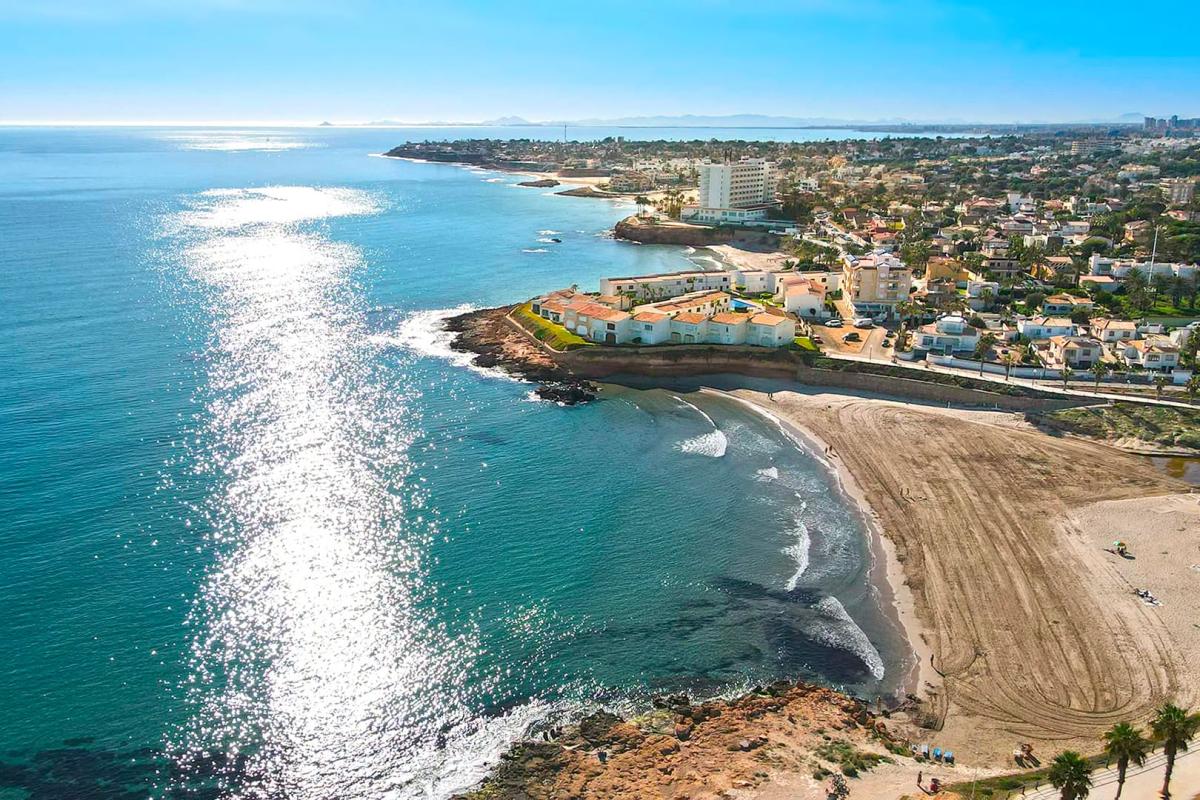
Orihuela Costa can be confusing when you first look at a map. A property described as being in the area might be close to a sandy beach, beside a golf course or several kilometres inland. The name covers a collection of coastal neighbourhoods and residential developments, not one traditional town centre.
That variety is part of its appeal. You can spend a morning walking around a small cove, have lunch near a marina and end the day in a residential area that feels quite different from the coast. The trick is to stop asking which part is ‘best’ and start asking what you would actually like to do there.
La Zenia: a busy coastal base
La Zenia is a familiar starting point for visitors. There are beaches, cafés and restaurants in the wider area, plus the large Zenia Boulevard shopping centre. It tends to suit people who enjoy having somewhere to go without planning an elaborate day out.
However, La Zenia beach, the shopping centre and some residential streets are not all on the same doorstep. Check the exact location of your accommodation or a prospective home rather than relying on an area label. A short drive can look deceptively simple on a listing map, but everyday walking routes matter more if you hope to leave the car parked.
Playa Flamenca and Punta Prima: near Torrevieja, but with their own feel
At the northern end of Orihuela’s coastline, Punta Prima borders the municipality of Torrevieja. Playa Flamenca lies further south. Both have residential streets, places to eat and access to smaller coastal coves.
This stretch appeals to people who like a practical mix of services and the sea rather than a single grand beach. It is worth exploring the streets back from the water. Conditions can change quickly between a lively commercial road and a quieter residential turning, especially outside the holiday season.
Cabo Roig: coves, a marina and coastal character
Cabo Roig’s headland gives the area its distinctive shape. The town hall describes La Caleta as a sheltered beach beside the marina; nearby stands a historic coastal watchtower associated with the sixteenth-century defence of the coast.
For a first visit, begin near the seafront and take time to look at the coves and rocky stretches instead of trying to cover the whole neighbourhood. If a coastal path is important to your plans, check the current access and condition of the route before setting out. The paths and steps are not equally suitable for everybody.
Cabo Roig can also feel quite different on a weekend evening from a quiet weekday morning. Visit at both times if you are considering spending long periods here.
Campoamor: more space and broad beaches
Further south, Dehesa de Campoamor has a different landscape, including wooded areas and larger beaches. The municipality identifies La Glea as one of the major beaches on this part of the coast, while Barranco Rubio is known for its length and the contrast between reddish cliffs and the sand.
There is no single Campoamor experience. Being close to the shore, a wooded residential street or a golf development can mean very different daily routines. A map pin labelled Campoamor tells you less than the route to the nearest shop, beach or bus stop.
Mil Palmeras: at the southern edge
Mil Palmeras sits near the boundary between Orihuela and Pilar de la Horadada. Its open sandy beach makes it attractive for a straightforward day at the sea. During the main holiday period, the atmosphere is naturally busier, while parts of the surrounding area have a different rhythm at other times of year.
It is a useful reminder that administrative boundaries are not always visible when you’re exploring the coast. For visitors, what matters is the beach, the streets around it and the practical journey to other places.
What about Villamartín and the inland urbanisations?
Not everything marketed as Orihuela Costa is beside the water. Villamartín and other inland residential areas are part of the wider coastal district and may be appealing for their golf, residential communities and different property layouts.
But ‘Orihuela Costa’ does not automatically mean ‘walk to the beach’. If that is important, measure the actual route from the front door rather than assuming the description will match your expectations.
How to get a genuine feel for an area
Before deciding which neighbourhood you prefer, try a simple two-part visit. Spend one morning using the places you would normally need, then return on another day just to enjoy yourself. Those two experiences reveal different things.
- Walk a real route: from the home or hotel to a supermarket, café or beach, not merely around the block.
- Visit in different seasons: a summer holiday atmosphere tells only part of the story.
- Check practical travel: work out how you would reach healthcare, schools, an airport transfer or nearby towns.
- Look beyond the listing photograph: shade, pavements, road crossings and local services are easy to overlook.
- Allow for your own pace: some people love being in the middle of things; others want somewhere quieter to come home to.
Orihuela Costa is best understood as a series of places with different strengths, not one interchangeable strip of coastline. If you’re considering a longer stay, it is worth giving yourself time to find the particular corner that feels comfortable.
For a broader regional comparison, see our Costa Blanca and Costa Cálida guide.