
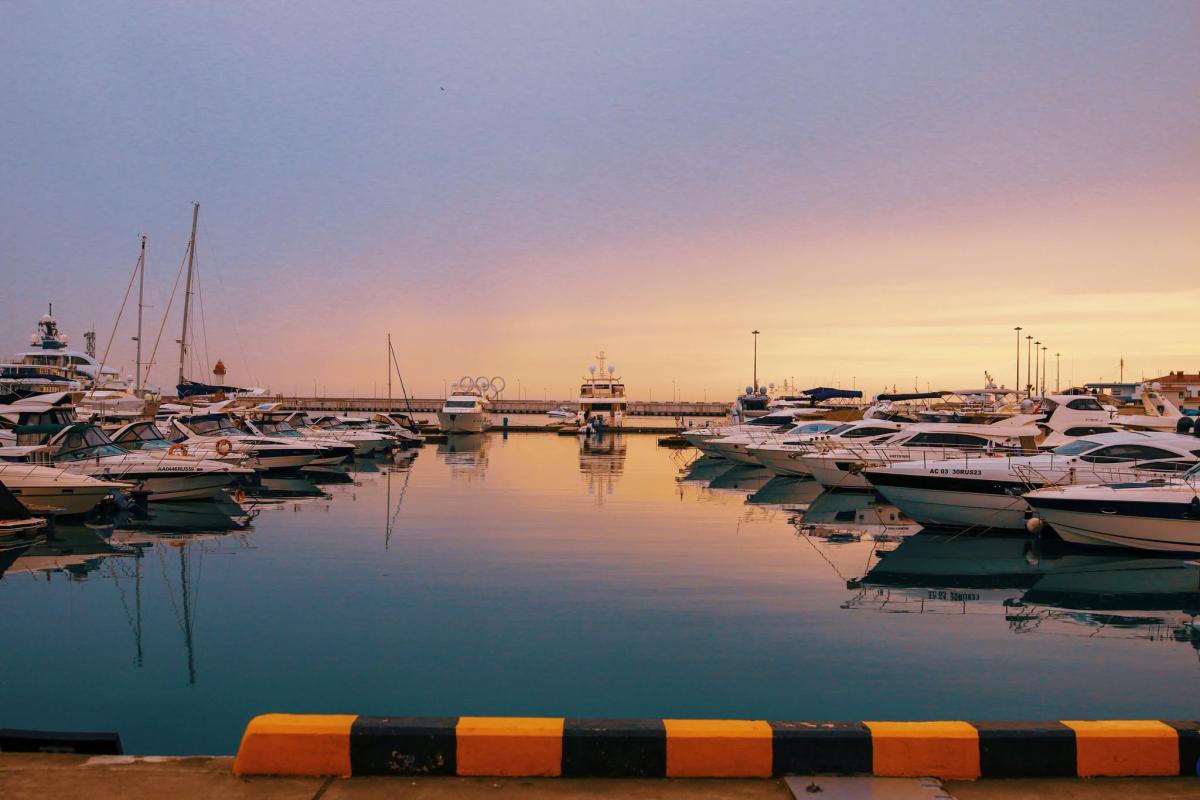
To understand Torrevieja, it helps to spend a little time looking away from the beach. The sea has always been more than a beautiful backdrop here, and the salt lagoons have been more than a curious colour in holiday photographs. Together, they shaped a working town, its harbour and even some of its best-loved music.
That history is still visible, although it does not always announce itself. You find it in an old loading site near the waterfront, in a modest museum and in the tradition of the habanera—a song style that has become part of Torrevieja’s cultural identity.
Before the seaside apartments, there was salt
Salt extraction was central to Torrevieja’s development. The lagoons near the town are part of a salt-production landscape, and getting that salt to ships mattered enormously. The harbour linked the inland salt operation with trade by sea, helping turn local natural resources into livelihoods.
From today’s waterfront it can be difficult to imagine the work involved: moving heavy loads, loading boats, maintaining equipment and making a living in conditions very different from those experienced by visitors today. Yet the physical relationship between the lagoons and the harbour helps explain why the town developed as it did.
The salt industry has not vanished into the past. Official tourism information still describes Torrevieja’s salt works as an active operation. That is one reason why the lagoons should be understood as managed, protected environments rather than picturesque places to wander freely into. Our guide to the salt lagoons covers responsible ways to visit.
Eras de la Sal: where the work met the water
One particularly revealing place is the historic Eras de la Sal complex by the seafront. Developed from the late eighteenth century onwards, it formed part of the system used to collect, store and load salt for shipment. Official historical information describes barges carrying salt out to ships anchored in the bay.
The setting offers a different perspective from a day at Playa del Cura. It speaks of working waterfronts and the people who kept them running. The preserved and reconstructed elements are especially interesting once you know what they were used for.
Check access before planning a visit. The area is subject to redevelopment and construction projects, including plans for cultural facilities. It should not be treated as a permanently open museum or assumed to be hosting events on any particular date.
What a small museum can tell you
Torrevieja’s Museo del Mar y de la Sal—the Sea and Salt Museum—brings together a more personal account of that history. Exhibits described by the municipal tourism service include salt-making equipment and craftwork, fishing and navigation objects, old photographs, ship models and items associated with maritime trades.
It is not the sort of place that requires an entire day. That is part of its strength. Half an hour looking carefully at a photograph or a model may change the way you see the harbour on your next walk. Details of the museum’s opening arrangements can change, so consult the official listing before setting out.
In a town known internationally for its beaches, places like this preserve something less immediately visible: the skills and routines behind everyday life.
Why Torrevieja sings habaneras
In the nineteenth century, Torrevieja’s maritime trade reached across the Atlantic, particularly towards Cuba and Puerto Rico. Sailors returning from those journeys also brought musical influences. The habanera, with its distinctive rhythm and often wistful lyrics, became closely associated with the town. Torrevieja’s first Habaneras competition was held in 1955, and the tradition grew into the International Habaneras and Polyphony Festival.
The music can be reflective, affectionate or nostalgic. You do not need to be a choral expert to understand why it resonates in a place where many families’ histories were tied to the sea. The festival gives that memory a public voice, while also welcoming performers and listeners from further afield.
Because performance venues and programmes can change—particularly during waterfront redevelopment—it is worth checking the current cultural calendar rather than travelling to a historic venue on the assumption that a concert will be taking place there.
A walk that brings the story together
A good way to connect the different pieces is to begin near the centre, visit the museum when it is open, then make your way towards the harbour and Paseo Vistalegre. Look out towards the water and think about the journeys that began here long before the coast became a holiday destination.
If you enjoy walking, the Dique de Levante offers an extended route out beside the port. From there, the relationship between the town and the Mediterranean is clear: the coastline, the marina and the open horizon become part of the same view. It is an enjoyable place to finish, particularly when the weather invites an unhurried stroll.
There is no need to turn this into a rushed itinerary. Leave time for an ordinary café stop and for the town to reveal itself between the listed attractions.
Five details worth noticing
- The harbour: not simply a place for leisure boats, but a key part of the town’s industrial and trading past.
- The Eras de la Sal: a historic salt-loading site whose evolving restoration requires checking current access.
- Traditional salt craftwork: an unusual reminder that an everyday material also became part of local creativity.
- Habanera music: a maritime cultural connection that continues through choral performance and local memory.
- The active lagoons: salt production, nature conservation and visitor interest share the same wider landscape.
A different way to get to know Torrevieja
A beach holiday and an afternoon exploring local history are not competing experiences. They complement one another. When you know even a little about the town’s salt trade and songs, Torrevieja’s modern waterfront has more depth. The sea is still beautiful, but it is also a place where generations worked, travelled, waited and came home.
That is a richer reason to return than the weather alone.